

Prompting: The New Digital Skill Every Student Needs
Prompt engineering is becoming the most valuable skill teens can learn right now. Here's what it is, why it matters, and how students can start building it today
Prompting: The New Digital Skill Every Student Needs

A decade ago, knowing how to type was considered a digital skill. Then it was knowing how to use Google. Then spreadsheets. Then coding. Every generation has its "you need to know this" skill . The one that separates people who move fluidly through the working world from those who struggle to keep up.
For students in school right now, that skill is prompting.
Not "knowing how to use ChatGPT" in the sense of opening an app and typing a question. That's like saying someone "knows how to drive" because they've been in a car. Prompting done well is precision communication: knowing exactly what to ask, how to frame it, what context to provide, how to push back on a weak answer, and how to get an AI system to produce something genuinely useful.
That's a skill. And it's one most teens aren't being taught.
What Prompt Engineering Actually Is
Prompt engineering is the practice of crafting precise instructions that guide AI models to produce accurate, useful, and relevant outputs.
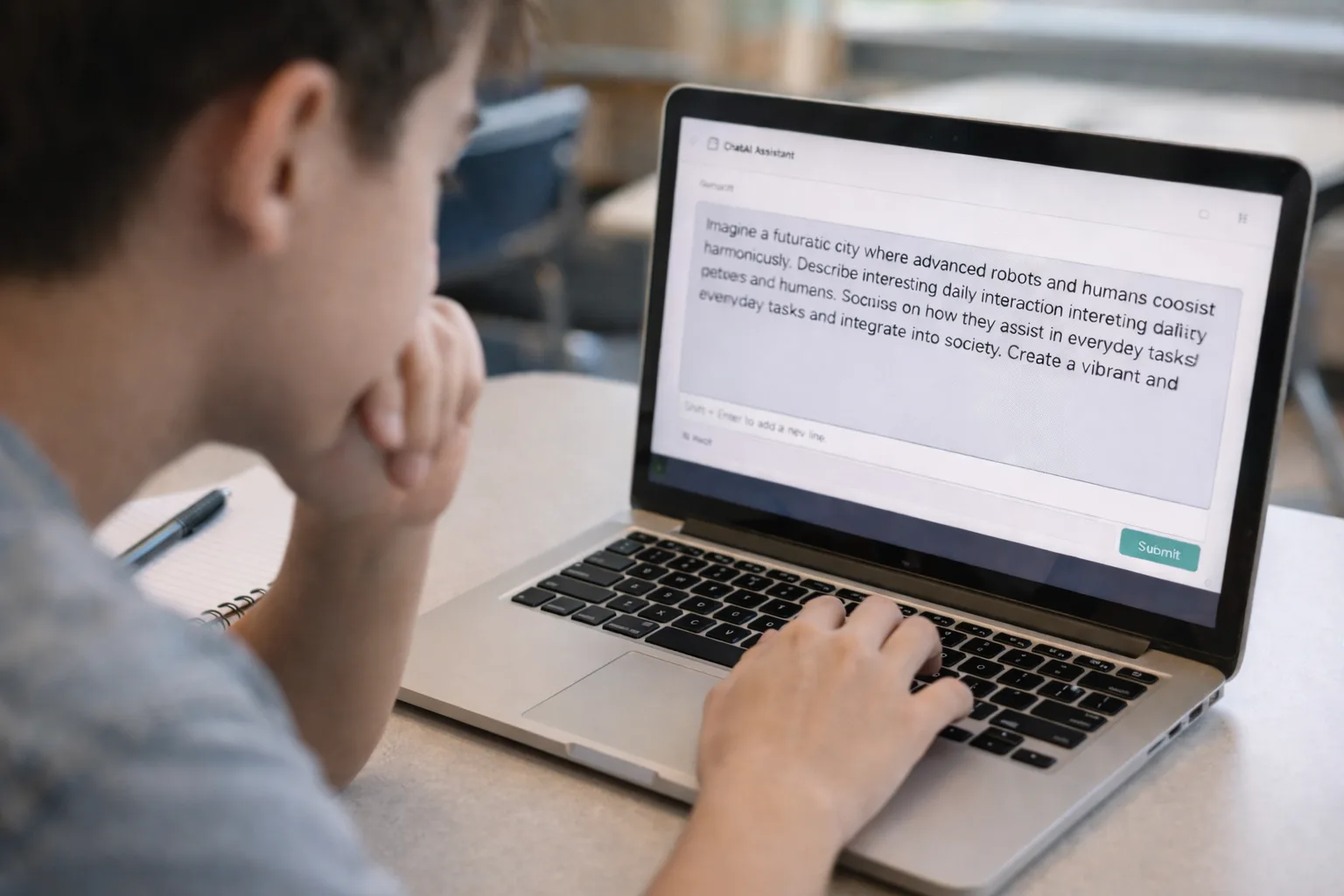
Think about the difference between asking an AI "write something about climate change" versus "write a 300-word persuasive op-ed for a high school newspaper audience arguing that individual consumer choices matter less than corporate policy reform use one compelling statistic in the opening sentence." The second prompt gets a dramatically better result. Not because the AI is smarter, but because the human directing it is.
That's the skill. And it scales across almost every field imaginable: healthcare professionals using AI to draft patient communications, marketers directing AI to write in a brand voice, engineers using AI to generate and debug code, teachers using AI to create personalized lesson materials. The skill of directing AI precisely isn't a niche technical capability, it's becoming a baseline expectation.
Demand for roles requiring prompt engineering grew by 135% in 2025. The most common new LinkedIn skill additions were ChatGPT proficiency (60%) and prompt engineering (38%). And the companies paying attention from IBM to Nationwide Insurance are now embedding prompting skills into every department's training, not just their tech teams.
Why Teens Have a Genuine Advantage Here
Here's the part that doesn't get said enough: teens who start learning this now are building a real, compounding advantage.
Students aged 14–22 are the largest users of AI tools globally, with 51% using generative AI regularly for learning and creativity. They're already comfortable with these tools in a way that many professionals in the workforce are not. The gap is in moving from casual use to skilled use from "I use AI sometimes" to "I know how to direct AI to do exactly what I need."
That transition is teachable. It requires understanding how large language models respond to different types of instructions. It requires learning to think in structure, what context does the AI need? What format do I want the output in? What constraints should I give it? These are learnable habits, and the students who build them now will carry them into every school project, every internship, every job they ever have.
95% of Fortune 500 companies were using AI in some capacity by 2025. Structured prompting processes have been shown to reduce AI errors by up to 76%. The professionals who know how to work with AI reliably, not just occasionally are already more valuable. The students who build those skills before entering the workforce are starting from an entirely different position.
What Good Prompting Looks Like in Practice
Good prompting isn't magic. It's a set of habits that can be learned and practiced.
The best prompts are specific about context, format, audience, and constraints. They tell the AI what role to take ("act as a debate coach reviewing this argument"), what the output should look like ("give me a bulleted list of the five weakest points in the reasoning"), and what the goal is ("I want to find the gaps before my teacher does"). Each of those details shapes the output dramatically.
Good prompting also involves iteration. Knowing when a first output is weak and how to push back. "That's too vague — be more specific" or "rewrite this from the perspective of someone who disagrees" are prompts that turn a mediocre first response into something genuinely useful. That back-and-forth is where the real skill lives.
At PrompToGo, teens don't just learn what prompting is — they practice it by building actual projects. They direct AI toward real goals, run into real limitations, and learn to work through them. That's how a skill becomes usable, not just understood.

Why Schools Haven't Caught Up — and What That Means for Students
The OECD and European Commission launched an AI Literacy Framework in 2025 — the first coordinated international effort to define what students should actually know about AI. The final version lands in 2026. That's how early we are in this shift.
Only 26% of U.S. school districts had AI training programs in place for the 2024-2025 school year. Most academic programs in computer science don't cover prompt design, model behavior, or the practical skills of working with large language models. The curriculum gap is real, and it's significant.
Which means students who wait for school to teach this skill may wait a long time. The ones getting ahead are seeking it out through programs like PrompToGo, through hands-on practice, through communities of people who are figuring this out together.
The students who come out of high school knowing how to think clearly, communicate precisely, and direct AI tools with skill will not be competing with the students who don't. They will be operating in an entirely different category.
Frequently Asked Questions
Q1: What is prompt engineering for students?
A: Prompt engineering is the skill of crafting precise instructions that direct AI systems to produce specific, useful outputs. For students, it means knowing how to ask AI questions in a way that gets genuinely helpful answers not just generic ones. It's a practical communication skill that transfers across every subject and future career.
Q2: Do you need to know coding to learn prompt engineering?
A: No. Prompt engineering is primarily a language and communication skill. While understanding how AI models work at a basic level is helpful, no programming background is required to start. Many of the best prompt engineers come from writing, marketing, education, and other non-technical backgrounds.
Q3: Why is prompting considered a digital skill for the future?
A: Because AI tools are now embedded in almost every industry, and the ability to direct those tools precisely is becoming as essential as the ability to use a spreadsheet or write a professional email. The demand for prompting skills in the workforce grew 135% in 2025 alone, and that trend is expected to continue.
Q4: How can teens start learning prompt engineering right now?
A: Start by experimenting — pick an AI tool like ChatGPT and practice writing more specific, detailed prompts. Notice the difference between vague and precise instructions. PrompToGo offers a structured, project-based program for teens 13+ that teaches these skills in a way that's actually engaging and builds a real portfolio of work.
Q5: Is prompt engineering a long-term career skill or just a trend?
A: The specific job title "Prompt Engineer" may evolve, but the underlying skill — directing AI tools with precision — is becoming embedded in almost every professional role. One leading technology executive described it as "a capability within a job title, not a job title to itself." That's exactly why learning it now, before it becomes universally expected, is such a strong move.
The Bottom Line
Every generation has a skill that separates those who move through the world confidently from those who are always catching up. For the students starting school right now, prompting the ability to direct AI tools precisely and purposefully is that skill.
It's not a trend. It's not a phase. It's the new baseline for working intelligently in an AI-integrated world. The question for students, parents, and educators is simply this: are you building it now, or hoping someone else will eventually teach it?