

The Future Classroom: Where AI Meets Human Thinking
The future classroom isn't human vs. AI — it's human plus AI. Here's what that actually looks like for students, teachers, and schools right now.FOCUS KEYWORD: future classroom AI human learning
The Future Classroom: Where AI Meets Human Thinking
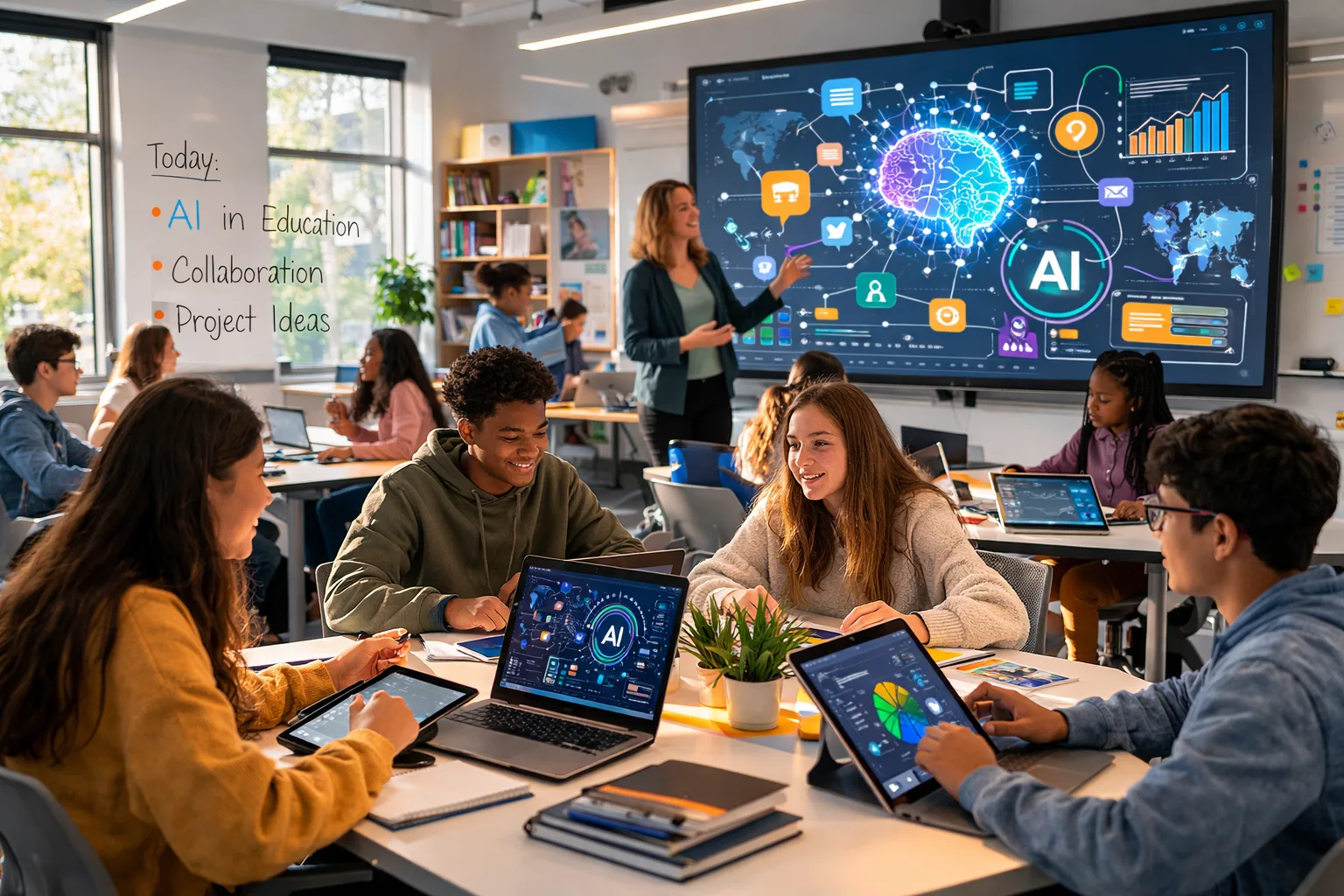
The classroom of 2030 isn't going to look like a sci-fi movie. There won't be robot teachers standing at the front of the room. There will, however, be something just as interesting — and more complicated: a room where AI handles certain things so that humans can do the things that actually require being human.
That future is closer than most educators realize. And for teens sitting in classrooms right now, it's not abstract — it's the world they're walking into.
A 2026 research report from Faculty Focus found that 70% of teachers are already worried that AI weakens students' critical thinking skills. That concern is real. So is this one: the students who never learn to work alongside AI will find themselves at a serious disadvantage in almost every career imaginable. Both things are true simultaneously. Which means the answer can't be "use AI" or "avoid AI." The answer has to be smarter than that.
What the Future Classroom Actually Looks Like
The future classroom is not a choice between humans and machines. It's a partnership — and the research on what that looks like is getting clearer.
Experts at IMD suggest an ideal balance where roughly 75% of classroom time focuses on developing uniquely human capabilities — creative thinking, analytical reasoning, collaboration, adaptive leadership — and 25% intentionally integrates AI tools. Not as a replacement for thinking, but as a scaffold for developing it faster.
AI will track where each student is struggling in real time. It will adapt content to different learning styles automatically. It will free teachers from grading, administration, and repetitive feedback — so that when a teacher is in front of students, they're doing what no AI can do: mentoring, inspiring, challenging, connecting.
That's not a threat to teachers. It's arguably the best version of what teaching can be.
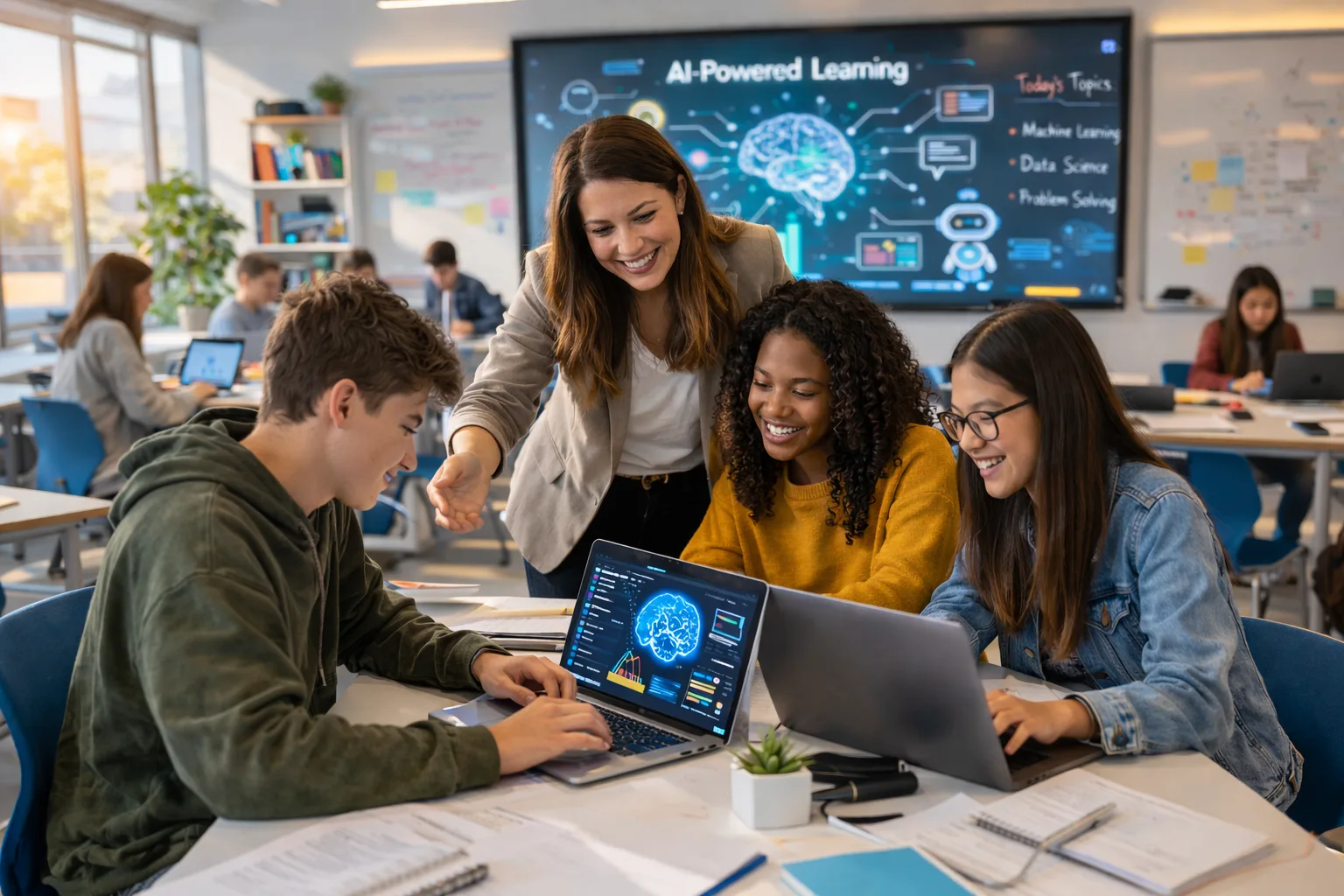
What AI Can Do — and What It Can't
Human tutors can interpret a student's emotional state with 92% accuracy. The most advanced AI tutoring systems currently manage 68%.
That gap is everything. It means that when a student is frustrated, scared, bored, or quietly struggling, a good teacher reads it and responds in a way that changes the moment. AI doesn't do that yet — and may never fully do it. Empathy, intuition, and human connection are not features that can be patched into a model.
AI-powered classrooms have been shown to improve learning outcomes by 23–35% in STEM and language learning when used intentionally. But the key phrase is when used intentionally. Students who use AI without critical engagement — who accept its outputs without questioning them — actually show declines in analytical reasoning. Researchers call this "cognitive offloading," and it's a real risk.
The future classroom needs both: the efficiency and personalization AI provides, and the judgment and humanity that teachers and students bring. Neither is optional.

The Skills That Matter More Than Ever
Here's the shift that's already happening: the World Economic Forum's Future of Jobs Report 2025 found that AI is expected to disrupt nearly every industry — and that the skills it's pushing to the top aren't technical. They're human.
Creative problem-solving. Ethical reasoning. Emotional intelligence. The ability to communicate clearly across complex situations. These are the skills AI cannot replicate — and they're exactly the ones that most traditional classrooms haven't prioritized.
The future classroom teaches differently because it has to. When AI can handle information retrieval and content summary, the classroom's job becomes developing judgment about what to do with that information. That's a harder, more important, and more interesting thing to teach.
For students, this is genuinely good news — if they understand it. The ones who see this shift coming are already building the skills that will matter. PrompToGo exists precisely for this moment: to give teens the tools to think alongside AI, not behind it.
What This Means for Schools Right Now
The data is honest: while 86% of education organizations now report using generative AI, only 31% of U.S. school districts had a formal AI policy as of late 2024. Most schools are adapting reactively, not proactively.
The schools getting it right are doing one thing differently — they're treating AI literacy not as a tech elective but as a foundational skill, the same way reading and mathematics are foundational skills. The OECD and European Commission launched a joint AI Literacy Framework in 2025, with the final version set for release in 2026, specifically because the gap between where students are and where schools are teaching has become impossible to ignore.
For parents and school administrators: the question to ask your school isn't "do you have a policy on AI?" It's "are you actively teaching students how to think with it?"
Frequently Asked Questions
Q: Will AI replace teachers in the future classroom? A: No. AI will change what teachers do, not eliminate them. Research consistently shows that the human elements of teaching — mentorship, emotional intelligence, classroom culture, and connection — are things AI cannot replicate. The future classroom is a partnership between AI tools and human educators.
Q: How is AI already being used in classrooms today? A: AI is being used for adaptive learning (personalizing content to each student), automating administrative tasks like grading, providing real-time feedback, and supporting students with different learning needs. 60% of K-12 teachers used AI tools during the 2024-2025 school year.
Q: What is cognitive offloading, and should students be worried about it? A: Cognitive offloading happens when students rely on AI so heavily that their own analytical skills start to weaken. It's a real concern — research shows students who accept AI outputs without critically engaging with them show declines in reasoning ability. The solution isn't to avoid AI, it's to learn to question it.
Q: What does AI literacy mean for a middle or high school student? A: AI literacy means understanding how AI tools work, knowing when and how to use them effectively, being able to evaluate AI outputs critically, and understanding the ethical dimensions of AI. PrompToGo teaches all of these practically, through real projects — not just theory.
Q: How should parents talk to their teens about AI in school? A: Start by asking them how they're already using AI — most teens are, whether parents know it or not. Then have a conversation about the difference between using AI to do your thinking and using AI to sharpen your thinking. That distinction matters enormously for their development.
The Bottom Line
The future classroom isn't a battleground between humans and machines. It's a room where the best of both show up together — where AI handles the repetitive, the routine, and the data-heavy, so that humans can do the irreplaceable work of thinking, connecting, and growing.
The students who understand this now don't just have an advantage in school. They have a head start on the rest of their lives.