

AI Won't Replace Learning — But It Will Redefine It
Artificial intelligence is transforming education, but it won’t replace learning. Instead, it’s redefining how students explore ideas, solve problems, and develop critical thinking skills. Understanding AI literacy and responsible AI use is becoming essential for students, parents, and educators navigating the future of modern classrooms.
AI Won't Replace Learning — But It Will Redefine It
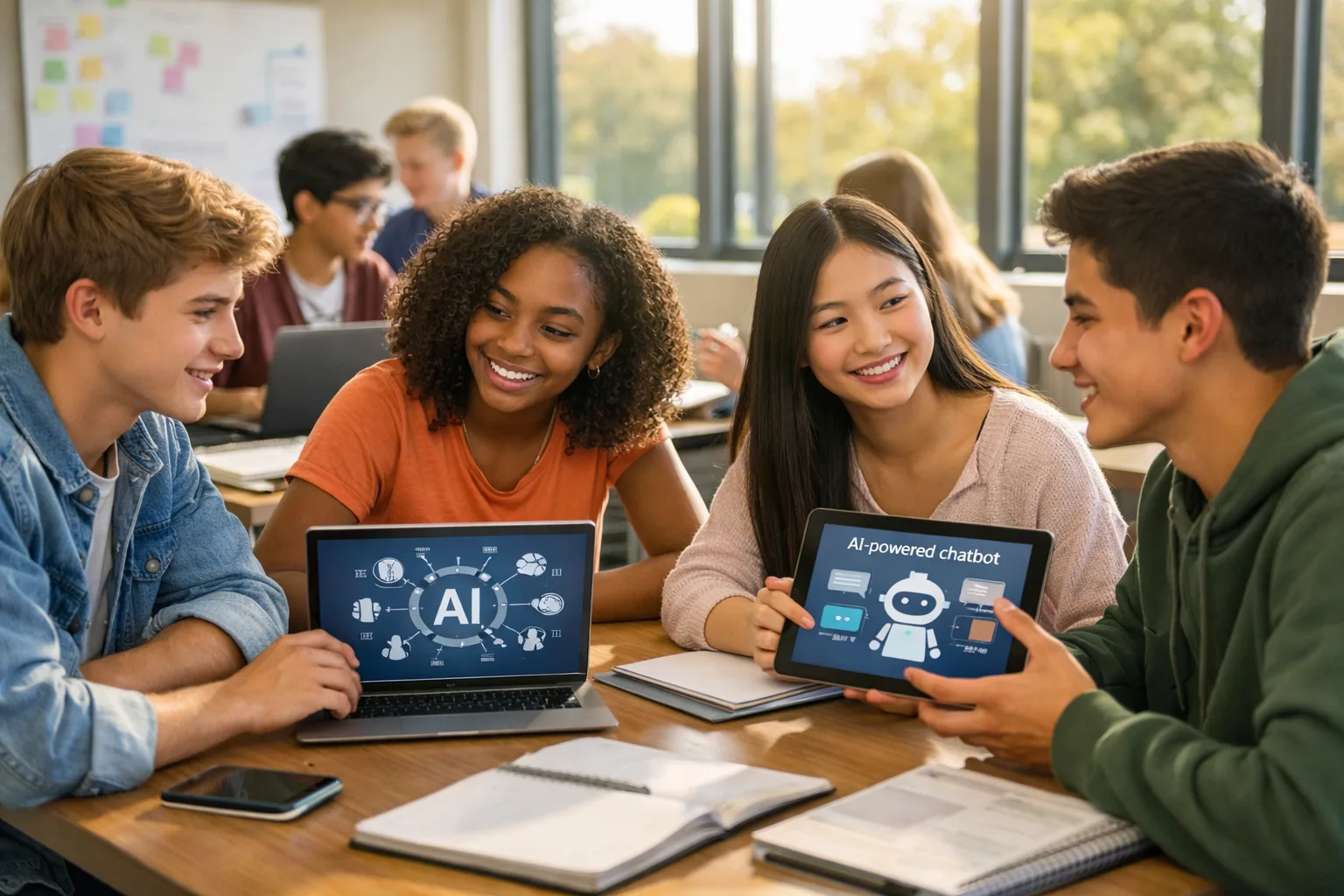
Here's what no one tells students afraid of AI: the tool that worries you most is also the one that could make you better at everything.
A 2025 Harvard study found that students using AI tutors learned more than twice as much in less time compared to peers in traditional classrooms. That's not AI doing the learning for them that's AI sharpening how humans learn. There's a difference, and it's worth understanding.
The real shift isn't that AI is getting smarter. It's that what schools need to teach is changing fast. If you keep training students to do what AI already does well regurgitate facts, summarize text, format essays you're not preparing them for a future. You're preparing them to lose to a machine. What you need to teach instead is what AI can't do: question assumptions, make judgment calls, create something genuinely new.
What "Replacing Learning" Actually Means — and Doesn't
AI is not replacing the need to learn. It is replacing certain tasks that we once confused with learning.
Looking up an answer used to require memory. Formatting a report used to require time. Translating a language used to require years of study. AI handles all of that now. But here's what AI cannot do: it cannot tell you whether an answer matters, decide whether a report should be written at all, or understand the human reason you're communicating across a language barrier in the first place.
That's judgment. That's purpose. Those are learned and they matter more now, not less.
The students who will thrive aren't the ones who refuse to use AI, or the ones who use it to skip the work. They're the ones who use it strategically as a tool they direct, not a crutch they lean on.
The Skill Schools Haven't Caught Up to Yet
Student AI usage jumped from 66% in 2024 to 92% in 2025. Nearly 9 in 10 students now use generative AI tools for assessments.
But here's the problem: only 31% of U.S. school districts had AI-related policies in place as of late 2024, and only 30% of teachers report feeling confident using the same AI tools their students are already using every day.
That gap is a problem. Not because AI is dangerous, but because students learning to use AI without guidance is like handing someone a car before they know how to drive. The car isn't the problem. The lack of instruction is.
This is exactly why PrompToGo was built. Not to teach teens how to fear AI or simply tolerate it — but to teach them how to direct it. Prompt engineering (the skill of crafting precise instructions that guide AI to useful outputs) is already listed as a desired competency in job postings across tech, marketing, healthcare, and finance. It's not a niche skill anymore. It's becoming the baseline.
What Good Learning Looks Like When AI Is in the Room
The best version of AI-assisted learning doesn't look like a student asking ChatGPT to write their essay. It looks like a student using AI to stress-test their argument, then rewriting the essay themselves. It looks like using AI to generate three counterarguments and then deciding which one to take seriously.
That's thinking. Real thinking. And it's harder than it looks which is why it's worth teaching.
A 2025 study found that AI-powered classrooms can improve learning outcomes by 23–35% when used intentionally. The World Economic Forum reports that 71% of teachers and 65% of students now view AI assistants as essential for learning and workforce preparation. The question isn't whether AI belongs in education. That debate is over. The question is how well-equipped students are to use it with judgment.
Students who learn to work with AI critically, purposefully, skillfully will have a major advantage. Not over the AI. Over everyone who didn't learn this when they had the chance.

Frequently Asked Questions
Q1: Will AI replace the need for students to learn?
A: No but AI is forcing education to evolve. AI handles routine tasks like summarizing and formatting, but the skills that matter more than ever are the human ones: critical thinking, judgment, creativity, and the ability to direct AI purposefully. Learning isn't disappearing it's becoming more important.
Q2: Is it cheating to use AI for schoolwork?
A: That depends entirely on how it's used. Using AI to generate a finished essay you submit as your own thinking is dishonest. Using AI to research, stress-test ideas, get feedback, and accelerate learning is no different from using a calculator or a dictionary it's a tool. The difference is in how you engage with the output.
Q3: What age is appropriate for teens to start learning AI skills?
A: Research shows that 13+ is the sweet spot for hands-on prompting and real project work. PrompToGo's program is specifically designed for teens aged 13 and up, with practical skills, not just theory.
Q4: What human skills matter most in an AI-driven world?
A: Critical thinking, creative problem-solving, ethical reasoning, and the ability to communicate clearly are increasingly valuable precisely because AI cannot replicate them. These are the skills education should be building and the ones PrompToGo puts at the center of everything.
Q5: How is AI redefining what schools need to teach?
A: Schools are moving away from rote memorization and task completion toward teaching students how to evaluate information, ask better questions, and work alongside AI tools responsibly. The OECD and European Commission launched a joint AI Literacy Framework in 2025 specifically to close this gap.
The Bottom Line
AI won't make learning obsolete. It will make shallow learning obsolete. The students who are going to lead in their careers, in their communities, in whatever comes next are the ones who learn to think clearly, ask powerful questions, and use AI as a tool they master rather than a shortcut they depend on.
The bar isn't being lowered. It's being raised. And the teens who understand that now are already ahead.